
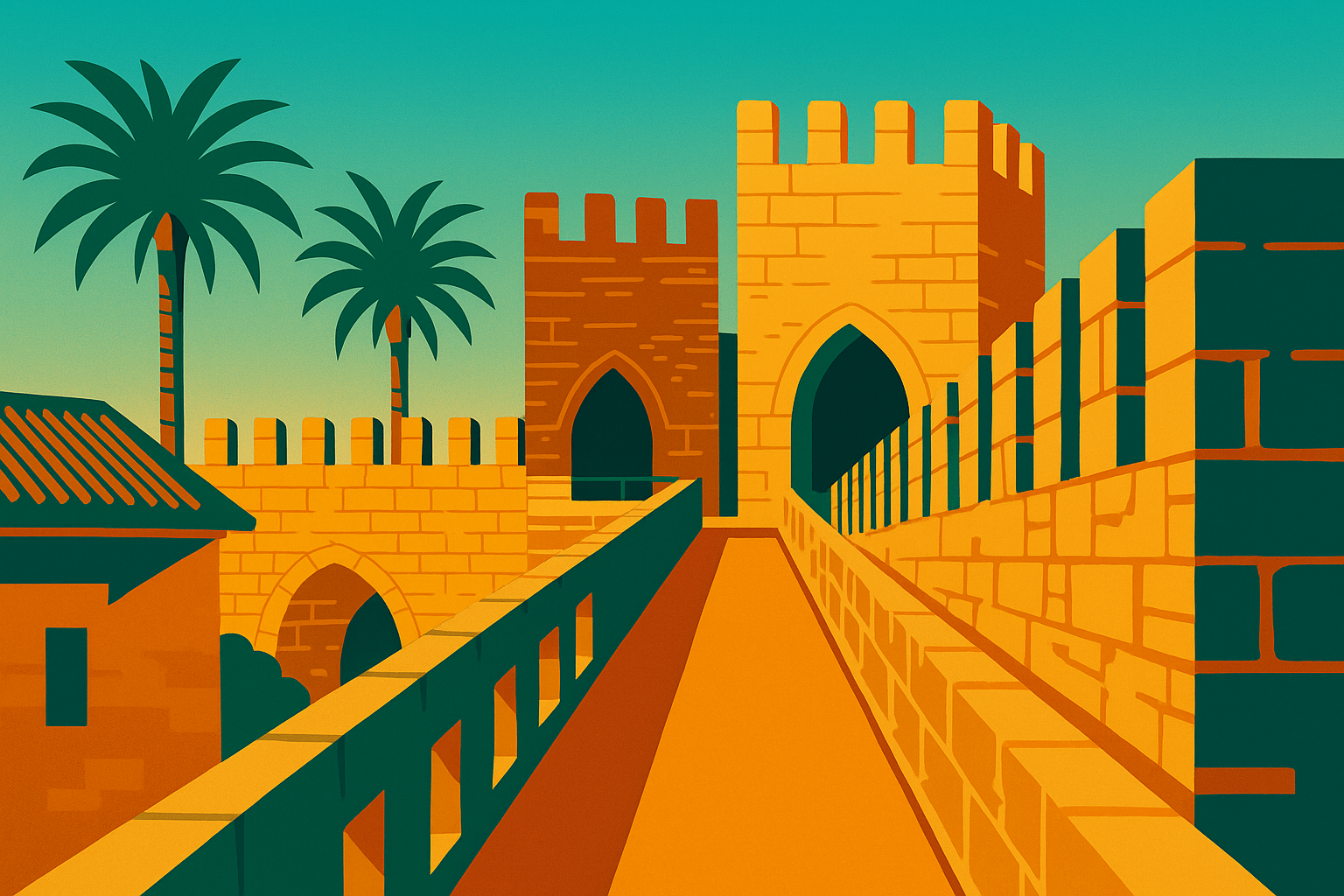
Old Town of Alcúdia
Discover the most beautiful coves
To explore the hidden coves and move freely around the island, a car is your best solution. We recommend booking one in advance to secure the best price and not miss a single corner of paradise.
🔍 Find the perfect car for youA Guide to Alcúdia and Mallorca’s North: From Ancient Walls to Coastal Wonders
Northern Mallorca isn’t just one place; it’s a collection of worlds existing side-by-side. On one hand, you have the ancient, fortified heart of Alcúdia Old Town, a cultural mecca where Roman legions and Moorish farmers left their indelible marks. On the other, you have the sun-drenched, modern energy of coastal resorts, where the sea is a source of joy, not a threat. This region offers a profound duality: a chance to step back in time within medieval walls and, just a few kilometres away, to embrace the vibrant life of the Mediterranean coast.
This guide is your key to unlocking the north. We’ll walk the ramparts of a fortress city, compare the distinct personalities of the area’s main hubs to help you find your perfect base, and navigate the logistical traps of its most stunning natural landscapes. Whether you’re a history enthusiast, a family seeking the perfect beach, or an active traveller ready to cycle its legendary roads, the north of Mallorca has an experience waiting for you.
The Enduring Heart: Discovering Alcúdia Old Town
At the core of the entire region lies the impeccably preserved Alcúdia Old Town. This walled city is a living palimpsest, a place where layers of history are visible on every rustic sandstone facade and down every narrow cobblestone alley. It’s the historical anchor that gives the entire area its name and its soul.
A Journey Through Time: The History of Alcúdia
While human presence here dates back to 6000 BC, the story of Alcúdia as a great city begins with the Romans. In 123 BC, they founded the magnificent city of Pollentia, establishing it as the capital of Mallorca. For centuries, it thrived as a strategic port until it was ravaged by Vandal invasions in the 3rd century AD.
The town’s very name, however, comes from the subsequent Islamic period. ‘Alqudya’, the Arabic word for “The Hill,” referred to a farmhouse built on the highest point of the current town—a naturally defensible position. This strategic location would define its future. After the Catalan conquest, King Jaume II ordered the construction of the formidable medieval walls in 1300. This wasn’t a project of prestige, but one of pure survival.
For centuries, the sea was a source of terror, a highway for pirate attacks. The town’s location, a deliberate one kilometre inland, and its massive walls served as a “defense shield” for its people. This historical reality explains the fundamental “dual personality” of the area today: the ancient, fortified refuge of the Old Town, and the modern, exposed resort of Port d’Alcúdia, which only flourished when tourism turned the coast from a liability into an asset.
What to See and Do in the Walled City
The historical centre, along with the Roman ruins just outside, was declared an Artistic Historical Site in 1974, protecting its unique architectural fabric.
The Medieval Walls: The town’s most dominant feature is its 14th-century Gothic walls. This limestone fortress runs for 1.5 kilometres, reinforced with 26 towers and standing at an average height of six metres. Walking atop the ramparts is an essential activity, offering panoramic views over the terracotta rooftops and out towards the Bay of Pollensa.
The Great Gates (Portals): Two monumental gates grant access to the old city. To the west is the Porta de Mallorca (or Porta de Sant Sebastià), with its two imposing towers linked by a grand arch. To the east, facing the old port route, is the Porta del Moll (or Xara Gate), distinguished by its two large square towers, which still retain the original mechanism for lowering the gate.
The Sant Jaume Church: This church has a fascinating story. While its origins are 14th-century Gothic, the structure you see today is largely a stunning 19th-century Neo-Gothic reconstruction. The original church collapsed, and this new one was built to honour its historic foundations. For a symbolic fee of around €1, you can enter and visit its small museum of religious artifacts. The church is also noted for being wheelchair accessible.
The Roman City of Pollentia: Located just outside the walls, this is one of the most significant archaeological sites in the Balearic Islands. A combined ticket of approximately €3–€4 grants you access to the ruins, which include a residential area, the forum, and a remarkably preserved Roman Theatre—the smallest in Spain, dramatically carved directly into the bedrock. Your ticket also includes entry to the Pollentia Monographic Museum inside the Old Town, where you can see the pottery, sculptures, and coins unearthed from the site.
The Vibe Within the Walls: Markets, Dining, and Boutique Charm
The restored Old Town is a vibrant, year-round destination. The atmosphere is defined by its maze of narrow, peaceful streets, many of which are pedestrian-only. It’s a place made for strolling and discovery.
A pillar of local life is the Alcúdia Market, held every Tuesday and Sunday morning (approx. 8:00 am to 1:30 pm) near the Porta del Moll. This bustling market is a sensory experience, selling everything from fresh local produce and cheeses to leather goods, crafts, and linens.
The town’s social and gastronomic heart beats in the Plaça de la Constitució, the main square, which is lined with charming cafes and restaurants. The culinary scene is thriving, with authentic options like the Italian Osteria El Patio and innovative concepts like Restaurante Ronda 63, known for its Asian-fusion tapas. For unique, tasteful souvenirs, explore the main commercial streets of Carrer Major and Carrer del Moll.
In recent years, the Old Town has begun a strategic transformation. It is evolving from a day-trip destination into a primary luxury accommodation base. This is evident in the rise of splendid boutique hotels set within lovingly restored historic townhouses. Properties like the Forum Boutique Hotel & Spa and Can Mostatxins—the result of a six-year “labour of love”—signal a new identity, attracting sophisticated travellers who value authentic Mallorcan heritage as the ultimate luxury.
Choosing Your Base: Alcúdia Old Town vs. The Ports
A critical mistake for first-time visitors is assuming that “Alcúdia” is a single destination. The historic inland town and the coastal port are two entirely different worlds. When you add the nearby Port de Pollença to the mix, you are faced with three distinct choices, each offering a radically different holiday experience.
Alcúdia Old Town: The Historic Anchor
This is the medieval, cultural, and atmospheric heart of the region. Staying here feels like stepping back in time, surrounded by rustic sandstone facades and sophisticated charm. It’s best for history and culture enthusiasts, couples seeking a romantic getaway, and travellers who prefer the intimacy of luxury boutique hotels over large resorts. The nightlife is surprisingly lively but refined, centred on ambient restaurants, high-quality tapas bars, and cocktails in historic plazas.
Port d’Alcúdia: The Vibrant Family Resort
In refreshing contrast to the Old Town, Port d’Alcúdia is a modern, lively seaside resort. It is unapologetically touristy and extremely family-friendly. Its dominant feature is the magnificent Playa d’Alcúdia, a 14km-long stretch of beach with calm, shallow waters perfect for children. The bustling marina is the heart of the action, offering water sports like jet skiing and banana boating. This is the ideal base for families (the Hidropark water park is nearby), beach-lovers, and anyone seeking extensive amenities and entertainment. The nightlife is the most active of the three, with a hub known as “Dollar Street” where the party goes well into the night.
Port de Pollença: The Serene Retreat
If you’re seeking a slower, more serene pace of life, Port de Pollença is your answer. Often described as “effortlessly elegant,” it is quieter and less sprawling than its neighbour, radiating a relaxed seaside charm. The town is defined by its beautiful crescent-shaped bay and the iconic, pine-fringed promenade known as the Pine Walk. It’s the perfect choice for couples, families seeking a more peaceful retreat, and active travellers, as it serves as the primary gateway to the world-class cycling and hiking routes of the Formentor Peninsula and the Serra de Tramuntana. The evening atmosphere is laid-back, with a subtle, buzzing scene of candle-lit waterfront tables and live acoustic music rather than late-night clubs.
Beyond the Towns: Exploring the Natural Wonders of the North
The region is framed by world-class natural attractions, from dramatic coastal cliffs that plunge into the sea to protected wetlands teeming with life.
The Dramatic Cliffs of Cap de Formentor
The Formentor Peninsula is a narrow, mountainous spit of land famous for its magnificent viewpoints and hidden coves. The winding Ma-2210 road connects Port de Pollença with the iconic lighthouse at the end of the cape. A mandatory stop is the Mirador Es Colomer, which offers staggering views and is an ideal spot for sunset.
However, a spontaneous drive here in high season is impossible. Crucial Traffic Restrictions: From June 1st to September 30th, the Ma-2210 road is restricted to private traffic between 10:00 am and 10:30 pm. During these hours, the only way to access the peninsula, including the viewpoint and Formentor Beach, is via the public Bus 334 shuttle from Port de Pollença or Alcúdia. This window covers the entire practical day, meaning even the iconic sunset view is only accessible by bus during summer. Driving during restricted hours will result in a fine.
S’Albufera Natural Park: A Birdwatcher’s Paradise
Located right next to Port d’Alcúdia, the Parc Natural de s’Albufera de Mallorca is the largest and most important wetland in the Balearic Islands. It is a premier birdwatching destination, hosting over 10,000 wintering birds. The park features eight bird observatories and four marked itineraries for walking or cycling.
Visitor logistics are specific. Access to the park is on foot or by bicycle only; cars must be parked outside. While admission is free, you must obtain a mandatory free permit from the Reception Centre before entering the trails. The park is open from 9:00 am to 6:00 pm in summer and 9:00 am to 5:00 pm in winter, but the Reception Centre closes at 4:00 pm year-round.
An Active Playground: Cycling, Hiking, and Sea Adventures
The north is a road biking haven, serving as a training ground for professional teams. Key routes include the challenging 150km Serra de Tramuntana mountain route, the iconic climb from Port de Pollença to Cap de Formentor, and the easy, flat ride around the S’Albufera nature reserve.
For hikers, the Camí Boquer Trail is highly recommended. This easy, 2-hour round-trip hike starts directly in Port de Pollença and leads to the secluded, pebbly cove of Cala Bóquer.
Port d’Alcúdia is the main hub for maritime excursions. Popular boat trips include tours to the stunning Coll Baix Beach and nearby sea caves, morning dolphin-watching expeditions, and a wide array of water sports like kayaking and paddleboarding.
Your Practical Guide to Visiting Northern Mallorca
Effective planning is essential for making the most of this diverse region. Here is the actionable intelligence you need on timing and transport.
When is the Best Time to Visit?
The “best” time to visit depends entirely on your goals, as the atmosphere, crowds, and weather shift dramatically by season.
- Peak Season (July – August): These are the hottest months, with temperatures often climbing above 30°C. The area is buzzing with life, beaches are full, and local festivals like the Fiesta of Sant Jaume (July 25th) are in full swing. This is also the most crowded and expensive time, and the Formentor road restrictions are in full effect.
- Shoulder Seasons (May & September): Highly recommended, these months offer the perfect balance between sunshine and serenity. The weather is warm and the sea is pleasant for swimming, but the peak-season crowds have thinned out. Prices are also more moderate.
- Active Season (March – April): This is the prime time for cycling and hiking. Cooler temperatures (17-19°C) are ideal for outdoor pursuits, and the island is lush and blooming. This period also includes cultural events like the solemn Semana Santa (Holy Week) processions.
- Off-Season (November – February): For a quiet, cultural escape, this is the time. It’s incredibly budget-friendly with very few tourists, making it perfect for peaceful strolls. The weather is cooler (14-17°C) with a chance of rain, and some businesses may have reduced hours. A unique highlight is the sight of almond trees in full bloom in late January and February.
Getting There and Around
Renting a car is highly recommended for the flexibility to explore the region’s hidden coves and mountain villages. The drive from Palma de Mallorca Airport (PMI) is straightforward, taking approximately 50-60 minutes via the Ma-13 motorway.
For those relying on public transport, the TIB bus network is modern and efficient. The A32 bus runs an hourly service directly from the airport to Port d’Alcúdia, Playa de Muro, and Can Picafort. Locally, key routes connect the main hubs, including the 352 (Port d’Alcúdia to the Old Town) and the mandatory 334 shuttle to Formentor in summer.
Insider Tips for a Perfect Trip
A little local knowledge goes a long way in making your visit truly special.
The Market Day Dilemma: The Old Town market on Tuesdays and Sundays is a vibrant and popular event, but it draws huge crowds that completely change the town’s character. For the best experience, visit Alcúdia twice: once on a market day to soak in the energy, and again on a non-market day to enjoy the peaceful atmosphere and wander the car-free cobblestone streets without the crowds.
Parking and Accessibility: Public parking is located in designated lots just outside the medieval walls. Finding a spot is much easier on non-market days. While the cobblestone streets can be challenging, key attractions like the Sant Jaume Church are noted as wheelchair accessible.
The single most essential activity is to walk atop the medieval walls. This free experience offers a vantage point you can’t get from the street, with unique views down into private courtyards and out over the town to the bay.